Friday, 12:30 PM. I am standing in the bathroom of the immobile man's house, washing my hands, and I catch my reflection in the mirror above the sink. The man looking back at me is fifty-something, with the softening jawline and graying temples of someone who has stopped fighting time. He is wearing cargo pants with stains I do not want to identify and a polo shirt that has seen better decades. He looks tired. He looks ordinary. He looks nothing like the man who once presented at tech conferences, who once optimized ETL pipelines for Fortune 500 companies, who once earned in an hour what he now earns in a day. I stare at him for a long moment, and he stares back, and neither of us knows exactly who he is.
This is the article I have been avoiding. The others are about them—the men I care for, their conditions, their dignity, their strange and various forms of life. This one is about me. And I do not know how to write it without sounding like I am asking for pity, or worse, like I am performing my own suffering for an audience I am not sure I want. But I promised myself I would be honest in this series. So here it is.
I spent nearly twenty years as a data engineer. I built fault-tolerant, scalable production systems. I moved terabytes across continents. I knew the recent technologies not from blog posts but from hands-on experience. I knew AI. I knew data. I knew data pipelines. I knew how to deploy systems that did not break when the load spiked. And then I was laid off.
At first, it did not feel like a fall. It felt like a door opening. I had a sabbatical year. I took ski trips with friends and family. I worked on projects I had postponed for years because I never had the time. With the severance package and unemployment checks, I could do what I loved to do. I built things. I learned things. I breathed. For a while, I was not a data engineer. I was just a man with time, and the time felt like a gift.
But money runs out. Unemployment checks end. Bills do not care about your sabbatical. I began to send out resumes. I even built a platform for myself—a system where I could collect data engineer and AI roles, score them against my resume, tailor my applications to job descriptions, track every submission. It was a beautiful piece of engineering. It was exactly the kind of tool I would have built at my old job. And it worked perfectly at collecting rejections.
The tech layoffs of recent years had flooded the market. Thousands of engineers with my exact skill set were competing for the same shrinking pool of roles. Month after month, the platform scored jobs, I customized resumes, I applied. And month after month, the silence came back. Or the automated rejection. Or the interview that went well and ended in "we've decided to move forward with another candidate."
I was shocked. I thought I could find a decent job sooner. I had the experience. I had the skills. I knew how to build what they needed. But the reality was not what I expected. I started to ask the questions that haunt you at 3 AM when the mortgage is due and the savings are thinning. Am I too old? Am I overqualified? Am I lacking something I cannot see—some credential, some buzzword, some cultural fit that makes me unemployable? I was strong, healthy, knowledgeable, willing to work. But nobody wanted me.
So I tried to apply lower. I sent resumes to manual labor positions. Factory work. Warehouse work. Home care. Jobs that paid a fraction of what I once earned, jobs that required no degree, jobs that I could do with my hands while my brain went elsewhere. And they would not hire me either. I was overqualified. My resume scared them. They saw twenty years of engineering and assumed I would leave the moment something better came along. They were not wrong. But I needed to work. I needed to pay bills. And the doors kept closing.
I felt useless. That is the word. Not unemployed. Not between roles. Useless. A man with skills no one wanted, applying for jobs beneath his training and being rejected for having too much of it. The irony was not lost on me. I had spent my career building systems that filtered candidates, that scored resumes, that optimized hiring pipelines. And now I was the outlier that every system discarded.
Then one day, a home care agency contacted me. They needed someone. The pay was almost minimum wage. The work was lifting bodies, changing sheets, administering medication, sitting with people who could not thank you. I said yes. I was happy—actually happy—that finally someone wanted me. Finally I could work and make some money. Finally I was not useless.
But I could not say what I had become. I still cannot.
The first time I had to say "I am a caregiver" to someone who knew me as an engineer, the sentence stuck in my throat like a bone. We were at a party—my wife's colleagues, people I did not know well. The question came, as it always does: "So what do you do?" I opened my mouth to say something about AI, about consulting, about the startup I was planning. And instead I said, "I work in home care." The silence that followed was brief but absolute. Then: "Oh, that's... rewarding." It was not rewarding they heard. It was demotion. It was failure. It was what happened to him? I saw it in their faces. I saw it in my own face, reflected in the bathroom mirror, every day since.
Research on male caregivers reveals that I am not alone in this identity crisis. Studies of stay-at-home husbands and male caregivers document the "profound change" in family dynamics, the challenge to conventional masculinity, the dignity wound of downward mobility. One former pilot, laid off during the pandemic, described his transition this way: "To be frank, it was quite a struggle at first. Should I really do this? What will people think about me? My dignity was hurt, but in reality, I had no alternative." Yet this same man found that the role sparked "profound change" in his family, bringing him closer to his children. Another former hospitality worker actively challenged conventional masculinity through nurturing roles, contributing to what researchers call "gender-egalitarian families." These voices confirm what I feel: the caregiver's identity crisis is not a personal failure. It is a structural renegotiation of worth.
But knowing this does not make it easier. I am a man who built systems that scale. Now I hold a body that cannot move. I am a man who taught optimization. Now I bathe a man who cannot remember his wife's name. I am a man who wrote about career advancement. Now I wipe bodies that cannot thank me. The dissonance is not intellectual. It is muscular. It lives in my shoulders when I lift the immobile man from his chair. It lives in my knees when I kneel to tie the 88-year-old's shoes. It lives in my hands when I wash the architect's face and he looks at me with no recognition at all. My body has become my primary tool. And my body, unlike my code, does not improve with iteration. It only gets older.
Viktor Frankl, in Man's Search for Meaning, describes the "existential vacuum"—the inner emptiness that results when meaning derived from work and status is removed. He observed it in prisoners who had lost their professional identities, their social standing, their sense of future. "The unemployed worker, for example, is harassed by a sense of emptiness and the resulting lack of meaning in his life," Frankl wrote. I read this and I feel seen. Not because my situation is comparable to a concentration camp—it is not—but because the mechanism is the same. When the scaffolding of your self is pulled out, you do not simply adjust. You enter a vacuum. And the vacuum is where despair lives.
Frankl's answer to the vacuum is what he calls the "will to meaning"—the assertion that the primary human drive is not pleasure or power but the search for purpose. He identified three pathways: creative work, loving encounter, and the attitude one takes toward unavoidable suffering. I am hanging onto these like a lifeline. The creative work: I still write. I still build AI tools. I still teach. The loving encounter: my wife, my family, the men I care for. The attitude toward suffering: this is the hardest one. Because I am still angry. I am still grieving the career I lost. I still open LinkedIn and feel a sickness in my stomach when I see former colleagues posting about their promotions, their new roles, their stock options. I still see myself as an AI builder, an educator, a startup consultant. When someone asks what I do, I do not say I am a home caregiver unless I have to.
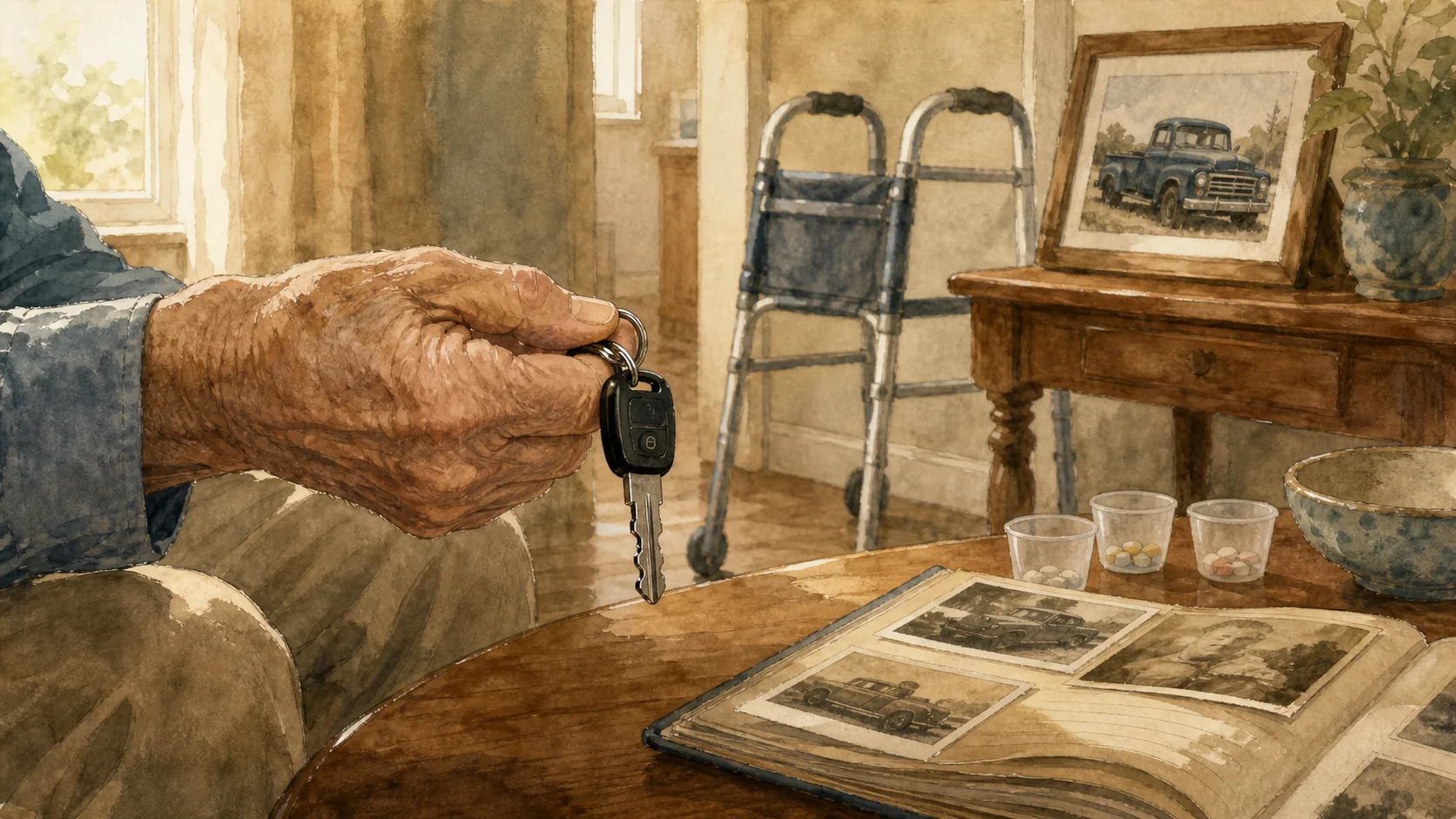
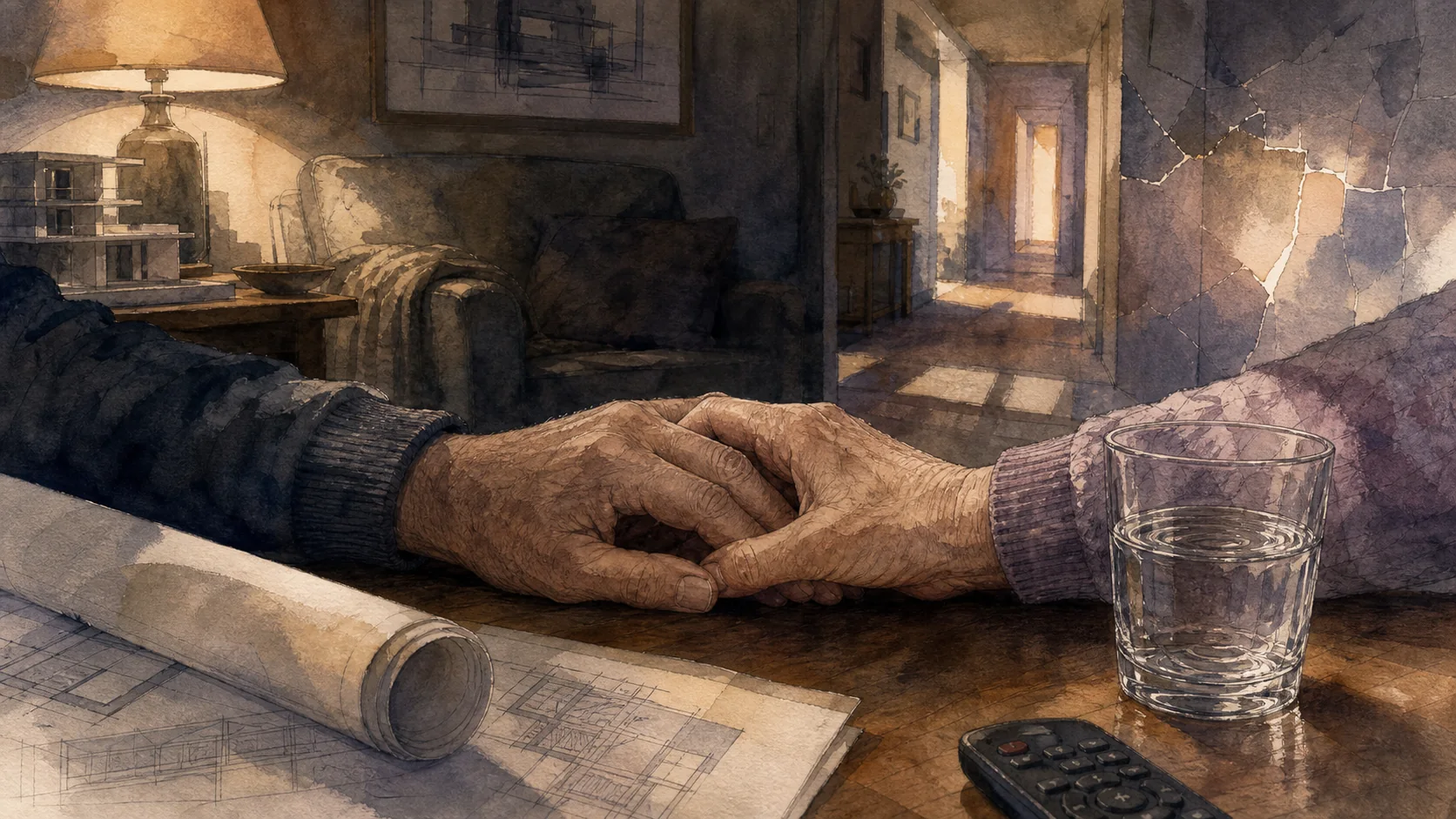
By 3:00 PM on Friday, I have seen all four of my weekday clients. The immobile man, who opened his mouth twenty times and closed it ten. The 88-year-old, who asked for his car keys and accepted, with rage, that he could not have them. The architect, who saw men in the bedroom and was afraid. And the space in between where I eat my lunch in the car, listening to podcasts about technology I no longer work with, wondering if I will ever sit in a conference room again and feel like I belong there. The answer, I suspect, is no. And the answer, I am slowly accepting, might be okay.
Because here is what I am learning, what I could not have learned in a cubicle: the body is not a machine to be optimized. It is a landscape to be inhabited. The men I care for are not edge cases in a dataset. They are entire worlds, compressed into failing flesh, still generating experience, still producing meaning, still here in ways that no dashboard can capture. And my work—this work that pays so little, that offers no stock options, that will never be featured in a case study—is the work of witnessing. Of refusing to look away. Of saying, with my presence, you are still here, and that matters.
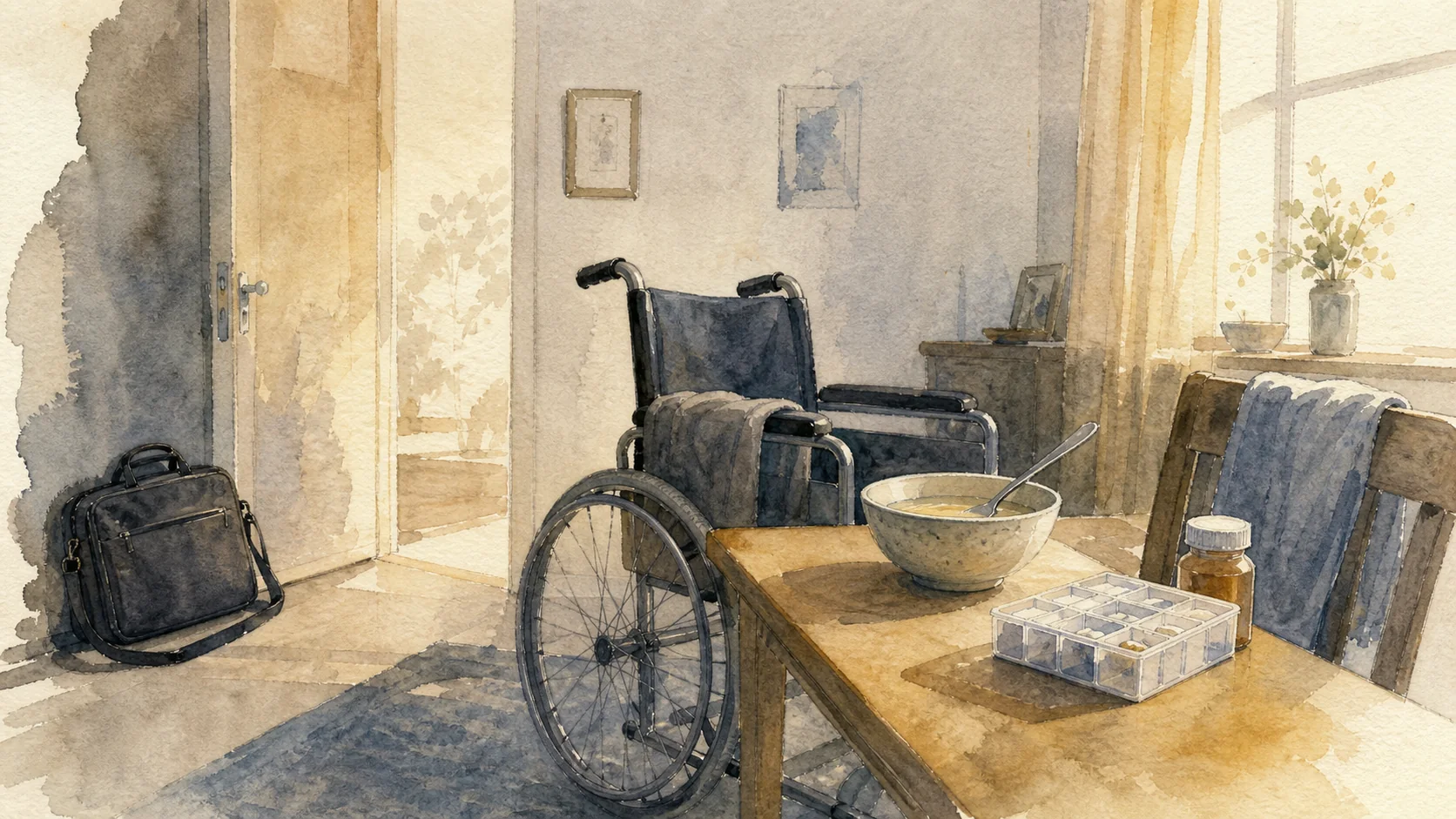
At 6:15 PM, I finish my last task and lock the door. The Friday evening stretches ahead. I will go home. I will shower. I will open my laptop and work on the AI project I am building, the one that reminds me I am still a builder, still a thinker, still capable of creation. And then I will set my alarm for Monday morning, 11:30 AM, when the cycle begins again. I will lift the spoon. I will wait for the mouth to open. I will pull the young man back from traffic on Saturday. I will take the car keys from the old man's hand. I will sit with the architect in the hallway while the men work on the pipes. And I will do it not because I have found the meaning of life, but because I have found that meaning is not a destination. It is a practice. And the practice, for now, is enough.
I am a caregiver. I say it now, and the sentence still sticks, but it moves. It is not a bone anymore. It is a word, heavy with everything it cost me and everything it is teaching me. The engineer who became a body. The builder who learned that not everything can be built. The man who was overqualified for every job and finally hired for the one that asked only for his presence. The man who is still here, still working, still trying to understand what compels human beings to continue living.
And the answer, I am beginning to suspect, is simpler than I thought. We continue because we are here. Because the mouth opens. Because someone is waiting with a spoon. Because the wanting to live is not a conclusion. It is a reflex. And reflexes, unlike optimized systems, do not require justification.
금요일 오후 12시 30분. 거의 움직이지 못하는 남자의 집 화장실에서 손을 씻다가 세면대 위 거울 속 내 모습을 본다. 나를 바라보는 남자는 오십대 중반쯤 되어 보인다. 시간과 싸우기를 멈춘 사람의 흐려진 턱선과 희끗한 관자놀이. 정체를 알고 싶지 않은 얼룩이 묻은 카고바지와 이미 좋은 시절을 오래전에 지난 폴로셔츠를 입고 있다. 피곤해 보인다. 평범해 보인다. 한때 기술 컨퍼런스에서 발표하고, 포춘 500 기업을 위한 ETL 파이프라인을 최적화하고, 지금 하루에 버는 돈을 한 시간에 벌던 그 남자와는 전혀 닮지 않았다. 나는 한참 그를 바라보고, 그도 나를 바라본다. 우리 둘 다 그가 정확히 누구인지 모른다.
이 글은 내가 피해 온 글이다. 다른 글들은 그들에 대한 것이다. 내가 돌보는 남자들, 그들의 상태, 그들의 존엄, 낯설고 다양한 삶의 형태들. 이 글은 나에 관한 것이다. 그리고 나는 연민을 구하는 것처럼 들리지 않고, 더 나쁘게는 내가 원한다고 확신할 수 없는 독자 앞에서 내 고통을 연기하는 것처럼 들리지 않고 이 글을 어떻게 써야 할지 모르겠다. 하지만 이 시리즈에서 솔직하겠다고 나 자신에게 약속했다. 그러니 여기 적는다.
나는 거의 20년 동안 데이터 엔지니어였다. 장애를 견디고 확장되는 프로덕션 시스템을 만들었다. 대륙을 가로질러 테라바이트 단위의 데이터를 옮겼다. 최신 기술을 블로그 글이 아니라 손으로 겪은 경험으로 알았다. AI를 알았다. 데이터를 알았다. 데이터 파이프라인을 알았다. 트래픽이 치솟아도 깨지지 않는 시스템을 배포하는 법을 알았다. 그러다 해고됐다.
처음에는 추락처럼 느껴지지 않았다. 문이 열린 것 같았다. 안식년이 생겼다. 친구와 가족과 스키 여행을 갔다. 시간이 없어 미뤄 두었던 프로젝트들을 했다. 퇴직금과 실업급여가 있는 동안 내가 좋아하는 일을 할 수 있었다. 만들고, 배우고, 숨을 쉬었다. 잠시 나는 데이터 엔지니어가 아니었다. 그냥 시간이 있는 남자였고, 그 시간은 선물처럼 느껴졌다.
하지만 돈은 줄어든다. 실업급여는 끝난다. 청구서는 안식년을 배려하지 않는다. 나는 이력서를 보내기 시작했다. 나 자신을 위한 플랫폼까지 만들었다. 데이터 엔지니어와 AI 직무를 모으고, 내 이력서와 점수를 매기고, 채용공고에 맞춰 지원서를 조정하고, 모든 제출을 추적하는 시스템이었다. 아름다운 엔지니어링이었다. 예전 직장에서 만들 법한 바로 그런 도구였다. 그리고 그것은 거절을 수집하는 데 완벽하게 작동했다.
최근 몇 년의 기술 업계 해고는 시장을 물바다로 만들었다. 나와 거의 같은 기술을 가진 수천 명의 엔지니어가 줄어드는 자리들을 놓고 경쟁했다. 달마다 플랫폼은 일자리에 점수를 매겼고, 나는 이력서를 수정했고, 지원했다. 달마다 돌아온 것은 침묵이었다. 자동 거절이었다. 잘 끝난 것 같던 면접 뒤의 “다른 후보와 진행하기로 했습니다”라는 말이었다.
나는 충격을 받았다. 괜찮은 일을 더 빨리 찾을 수 있을 줄 알았다. 경험이 있었고, 기술이 있었고, 그들이 필요로 하는 것을 만들 줄 알았다. 하지만 현실은 기대와 달랐다. 새벽 3시, 주택 융자 납부일이 다가오고 저축이 얇아질 때 사람을 괴롭히는 질문들이 시작됐다. 내가 너무 나이가 많은가. 과하게 경력이 많은가. 내가 보지 못하는 무언가, 자격증이나 유행어, 문화적 적합성 같은 것이 부족한가. 나는 건강했고, 강했고, 지식이 있었고, 일할 의지가 있었다. 하지만 아무도 나를 원하지 않았다.
그래서 더 낮은 자리에도 지원했다. 육체노동, 공장, 창고, 홈케어. 예전에 벌던 돈의 일부만 주는 일, 학위가 필요 없는 일, 손을 쓰며 머리는 다른 곳에 둘 수 있을 것 같은 일들. 그런데 거기서도 나를 뽑지 않았다. 나는 과잉 자격이었다. 내 이력서는 그들을 겁먹게 했다. 20년의 엔지니어링 경력을 보고 더 좋은 일이 생기면 곧 떠날 사람이라고 생각했다. 틀린 말은 아니었다. 하지만 나는 일해야 했다. 청구서를 내야 했다. 문은 계속 닫혔다.
쓸모없다고 느꼈다. 그 단어가 맞다. 실직자가 아니라, 전환기에 있는 사람이 아니라, 쓸모없음. 아무도 원하지 않는 기술을 가진 사람, 자기 훈련보다 낮은 일에 지원하고 그 훈련이 너무 많다는 이유로 거절당하는 사람. 아이러니를 모를 수 없었다. 나는 경력 내내 후보자를 걸러내고, 이력서를 점수화하고, 채용 파이프라인을 최적화하는 시스템을 만들었다. 이제 내가 모든 시스템이 버리는 이상값이었다.
그러던 어느 날 홈케어 에이전시에서 연락이 왔다. 사람이 필요하다고 했다. 임금은 거의 최저임금이었다. 몸을 들어 올리고, 시트를 갈고, 약을 챙기고, 고맙다는 말조차 할 수 없는 사람들 곁에 앉는 일이었다. 나는 예라고 했다. 기뻤다. 정말 기뻤다. 드디어 누군가 나를 원했다. 드디어 일하고 돈을 벌 수 있었다. 드디어 나는 쓸모없는 사람이 아니었다.
하지만 내가 무엇이 되었는지는 말할 수 없었다. 아직도 완전히 말하지 못한다.
나를 엔지니어로 알던 사람에게 처음 “나는 돌봄 일을 합니다”라고 말해야 했을 때, 그 문장은 목에 뼈처럼 걸렸다. 아내의 동료들이 있는 모임이었다. 잘 모르는 사람들이었다. 늘 그렇듯 질문이 왔다. “무슨 일 하세요?” 나는 AI, 컨설팅, 준비 중인 스타트업 이야기를 하려고 입을 열었다. 그런데 대신 “홈케어에서 일합니다”라고 말했다. 이어진 침묵은 짧았지만 절대적이었다. 그리고 “아, 보람 있는 일이겠네요.” 그들이 들은 것은 보람이 아니었다. 강등이었다. 실패였다. 저 사람에게 무슨 일이 있었나였다. 그들의 얼굴에서 보았다. 그리고 그 뒤로 매일 화장실 거울에 비친 내 얼굴에서도 보았다.
남성 돌봄 제공자에 관한 연구는 내가 혼자가 아님을 보여 준다. 전업 남편과 남성 돌봄 제공자에 대한 연구들은 가족 역학의 “깊은 변화”, 전통적 남성성에 대한 도전, 하향 이동이 남기는 존엄의 상처를 기록한다. 팬데믹 때 해고된 한 전직 조종사는 이렇게 말했다. “솔직히 처음에는 꽤 힘들었습니다. 내가 정말 이걸 해야 하나? 사람들이 나를 어떻게 볼까? 존엄이 상했지만 사실 다른 선택지가 없었습니다.” 그러나 같은 사람은 그 역할이 가족에게 “깊은 변화”를 가져와 자녀들과 더 가까워졌다고 했다. 또 다른 전직 서비스업 종사자는 돌봄 역할을 통해 전통적 남성성에 도전했고, 연구자들이 말하는 “성평등한 가족”에 기여했다. 이 목소리들은 내가 느끼는 것을 확인해 준다. 돌봄 노동자의 정체성 위기는 개인적 실패가 아니다. 가치에 대한 구조적 재협상이다.
그것을 안다고 쉬워지는 것은 아니다. 나는 확장되는 시스템을 만들던 남자다. 이제 나는 움직일 수 없는 몸을 붙든다. 나는 최적화를 가르치던 남자다. 이제 나는 아내의 이름을 기억하지 못하는 남자를 씻긴다. 나는 커리어 성장에 대해 쓰던 남자다. 이제 나는 고맙다고 말할 수 없는 몸을 닦는다. 이 불협화음은 지적인 것이 아니다. 근육에 산다. 움직이지 못하는 남자를 의자에서 들어 올릴 때 어깨에 산다. 88세 남자의 신발끈을 묶으려고 무릎을 꿇을 때 무릎에 산다. 건축가의 얼굴을 씻기는데 그가 나를 전혀 알아보지 못할 때 손에 산다. 내 몸은 내 주된 도구가 되었다. 그리고 내 몸은 코드와 달리 반복할수록 나아지지 않는다. 늙어 갈 뿐이다.
빅터 프랭클은 죽음의 수용소에서에서 “실존적 공허”를 설명한다. 일과 지위에서 오던 의미가 제거될 때 생기는 내면의 빈 공간이다. 그는 직업적 정체성과 사회적 위치, 미래감을 잃은 수용소 사람들에게서 그것을 보았다. “예컨대 실직한 노동자는 공허감과 그로 인한 삶의 의미 상실에 시달린다”고 그는 썼다. 나는 그 문장에서 나를 본다. 내 상황이 수용소와 같아서가 아니다. 결코 그렇지 않다. 다만 메커니즘이 같기 때문이다. 자기 자신을 받치던 비계가 빠지면 사람은 단순히 적응하지 않는다. 진공 속으로 들어간다. 그리고 그 진공에 절망이 산다.
프랭클의 답은 그가 “의미를 향한 의지”라고 부른 것이다. 인간의 가장 근본적 욕구는 쾌락이나 권력이 아니라 목적을 찾으려는 욕구라는 주장이다. 그는 세 가지 길을 말한다. 창조적 일, 사랑의 만남, 피할 수 없는 고통을 대하는 태도. 나는 이것들을 구명줄처럼 붙든다. 창조적 일: 나는 아직 쓴다. AI 도구를 만든다. 가르친다. 사랑의 만남: 아내, 가족, 내가 돌보는 남자들. 고통을 대하는 태도: 이것이 가장 어렵다. 나는 아직 화가 나 있다. 잃어버린 경력을 아직 애도한다. 링크드인을 열어 전 동료들이 승진, 새 역할, 스톡옵션을 올리는 것을 보면 속이 메스꺼워진다. 나는 아직 나를 AI 빌더, 교육자, 스타트업 컨설턴트로 본다. 누군가 무슨 일을 하느냐고 물으면 꼭 필요하지 않으면 홈케어 돌봄 노동자라고 말하지 않는다.
금요일 오후 3시, 나는 평일 클라이언트 네 사람을 모두 보았다. 입을 스무 번 열고 열 번 닫은 움직이지 못하는 남자. 자동차 키를 달라고 했다가 분노 속에서 안 된다는 사실을 받아들인 88세 남자. 침실에 남자들이 있다고 보고 무서워한 건축가. 그리고 그 사이, 차 안에서 점심을 먹으며 더 이상 일하지 않는 기술에 관한 팟캐스트를 듣고, 다시 회의실에 앉아 내가 그곳에 속한다고 느낄 날이 올지 생각하는 나. 내 예상으로 대답은 아니오다. 그리고 천천히 받아들이고 있는 대답은, 그래도 괜찮을지도 모른다는 것이다.
왜냐하면 사무실에서는 배울 수 없었던 것을 여기서 배우고 있기 때문이다. 몸은 최적화해야 할 기계가 아니다. 몸은 거주해야 할 풍경이다. 내가 돌보는 남자들은 데이터셋의 엣지 케이스가 아니다. 실패하는 살 안에 압축된 하나의 세계들이다. 아직 경험을 만들고, 의미를 생산하고, 어떤 대시보드도 포착할 수 없는 방식으로 아직 여기 있다. 그리고 나의 일, 임금이 낮고 스톡옵션도 없고 어떤 사례 연구에도 나오지 않을 이 일은 증언하는 일이다. 외면하지 않는 일이다. 내 존재로 이렇게 말하는 일이다. 당신은 아직 여기 있고, 그것은 중요합니다.
오후 6시 15분, 마지막 일을 끝내고 문을 잠근다. 금요일 저녁이 앞에 펼쳐진다. 집에 가서 샤워하고, 노트북을 열어 내가 만들고 있는 AI 프로젝트를 할 것이다. 그것은 내가 아직 만드는 사람이고, 아직 생각하는 사람이고, 아직 창조할 수 있는 사람임을 상기시킨다. 그러고 월요일 오전 11시 30분 알람을 맞춘다. 순환이 다시 시작될 것이다. 나는 숟가락을 들고 입이 열리기를 기다릴 것이다. 토요일에는 청년을 차도에서 끌어낼 것이다. 노인의 손에서 자동차 키를 받을 것이다. 남자들이 배관을 고치는 동안 건축가와 복도에 앉을 것이다. 내가 삶의 의미를 찾았기 때문에 그렇게 하는 것이 아니다. 의미가 목적지가 아니라 실천이라는 것을 발견했기 때문에 그렇게 한다. 그리고 지금은 그 실천으로 충분하다.
나는 돌봄 노동자다. 이제 그렇게 말한다. 여전히 문장은 걸리지만 움직인다. 더 이상 뼈는 아니다. 그것은 단어다. 그 단어는 그것이 내게 치르게 한 모든 것과 가르치고 있는 모든 것의 무게를 갖고 있다. 몸이 된 엔지니어. 모든 것이 만들어질 수는 없다는 사실을 배운 빌더. 모든 일에 과잉 자격이었지만 마침내 오직 그의 존재만을 요구하는 일에 고용된 남자. 아직 여기 있고, 아직 일하고, 인간이 계속 살아가도록 만드는 것이 무엇인지 이해하려 애쓰는 남자.
그리고 대답은 내가 생각한 것보다 단순한 것 같다. 우리는 여기 있기 때문에 계속한다. 입이 열리기 때문에. 누군가 숟가락을 들고 기다리고 있기 때문에. 살고 싶다는 마음은 결론이 아니다. 반사다. 그리고 반사는 최적화된 시스템과 달리 정당화를 필요로 하지 않는다.